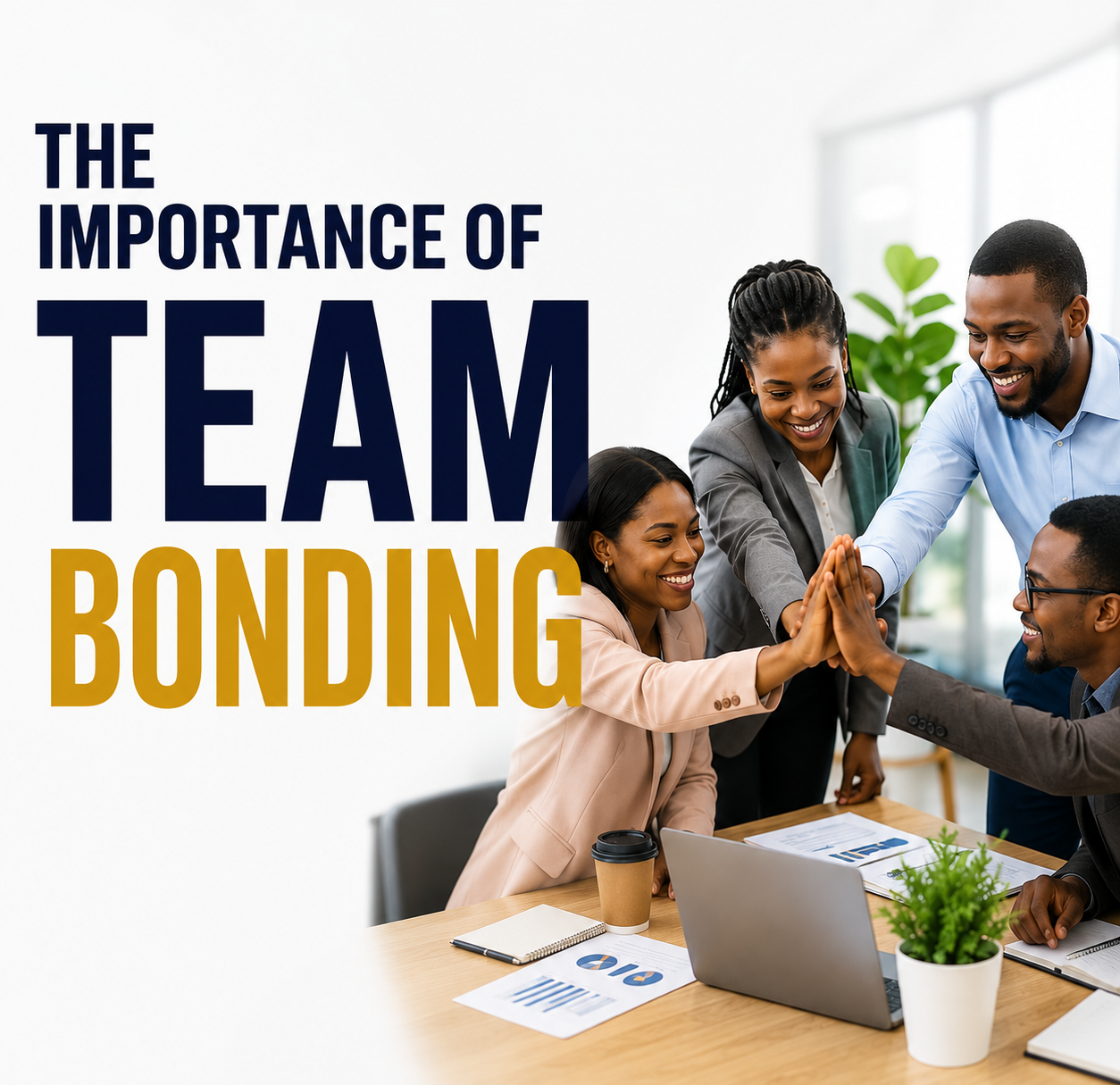
Every successful organization is powered by more than strategy, technology, or financial resources, it is driven by people. Behind every innovative idea, satisfying customer and completed project is a team of individuals working together toward a common goal. However, assembling talented employees alone does not guarantee success. The real difference lies in how well those individuals connect, communicate, and collaborate. Hence, team bonding becomes crucial.
Team bonding is mostly misunderstood as a series of social events or recreational activities organized outside the workplace. While these activities can contribute to stronger relationships, genuine team bonding extends far beyond occasional outings. It is the deliberate process of fostering trust, strengthening interpersonal relationships and creating an environment where employees feel valued, respected, and motivated to work together.
Trust is the cornerstone of every high-performing team. Employees who trust one another are more likely to share ideas openly, seek assistance when needed, and provide constructive feedback without fear of judgment. This atmosphere of psychological safety encourages innovation because individuals are comfortable proposing new approaches and challenging conventional thinking. When trust is absent, communication becomes guarded, collaboration weakens and opportunities for improvement are lost.
Strong team relationships also transform the quality of communication within an organization. Many workplace conflicts do not arise from differences in opinion but from misunderstandings, assumptions or ineffective communication. Employees who have built meaningful relationships tend to communicate with greater empathy and clarity. They understand one another’s strengths, personalities and working styles, making it easier to resolve disagreements and maintain focus on organizational objectives rather than personal differences.
Beyond communication, team bonding significantly enhances collaboration. Modern organizations increasingly rely on cross-functional teams where employees from different departments combine their expertise to solve complex problems. Such collaboration cannot thrive in an environment where individuals operate in isolation or compete unnecessarily. Team bonding nurtures mutual respect and encourages employees to view one another as partners rather than competitors.
The strength of an organization is measured not only by the talent it recruits but also by the quality of the relationships it cultivates. When employees trust one another, communicate openly, and work with a shared sense of purpose, they create an environment where both people and businesses thrive.